
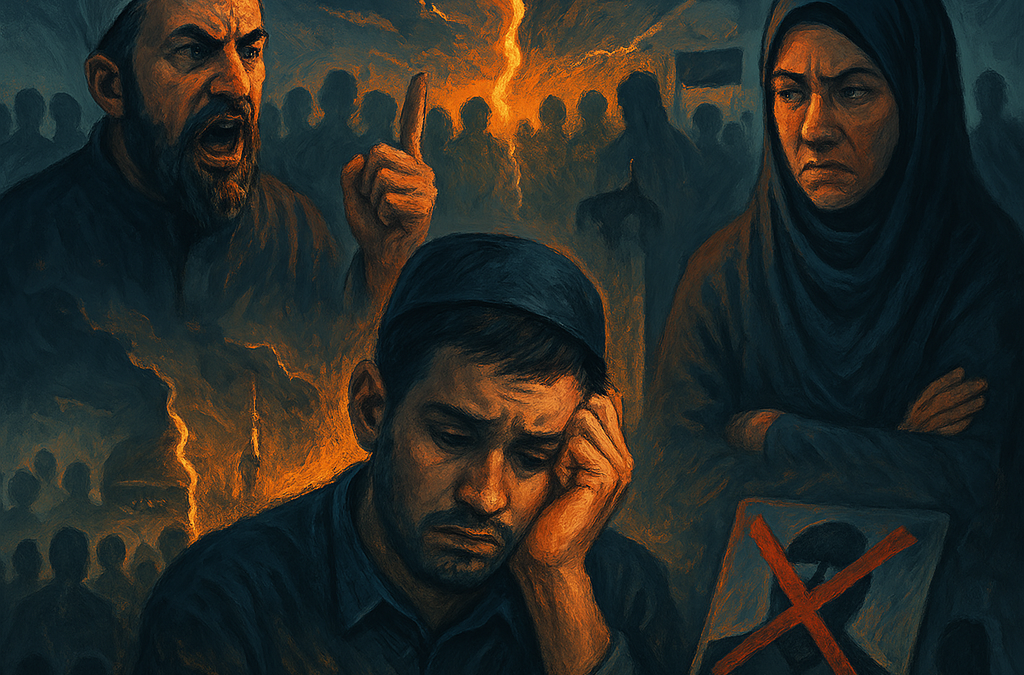
Religious identity isn’t just a private belief; it shapes communal bonds, cultural values, legal norms, and moral accountability. When a group falsely claims to represent a faith it fundamentally contradicts — as in the case of the Ahmadiyya / Qadiyani movement — it doesn’t just trigger theological controversy; it creates social confusion, division, and distrust.
1️⃣ Faith-Based Communities Thrive on Clarity
In Islam, belief defines belonging. From prayer to marriage, inheritance, and worship spaces, community life in Islam is structured around shared theological principles.
When a group like the Ahmadis / Qadiyanis claims to be Muslim while rejecting the finality of Prophethood, it leads to:
-> Confusion among common Muslims, especially youth and converts.
-> Legal complications in marriage, funeral rites, and public identity.
📌 Without doctrinal clarity, there can be no religious cohesion.
2️⃣ Psychological Tensions & Mistrust
When people feel that a group is using their faith’s name deceptively, it leads to social and emotional unrest:
-> Mainstream Muslims feel betrayed and misrepresented.
-> Interfaith and intra-faith trust is eroded.
-> Public discourse becomes tainted with unnecessary confrontation, often manipulated by external media or NGOs unaware -of the real issue.
📌 This isn’t “disagreement” — it’s identity hijacking, and its effects ripple through families, neighborhoods, and nations.
3️⃣ Societal Backlash and Sectarian Exploitation
Ahmadi / Qadiyani misrepresentation is not just a matter of belief—it’s often used as a political and legal tool to gain:
-> Minority status protections while claiming the majority’s identity.
-> International sympathy by portraying themselves as “persecuted Muslims sect,” while disregarding the doctrinal foundations of Islam.
This paradox creates:
-> Global misrepresentation of Islam.
-> Misuse of religious freedom laws.
-> Exploitation of legal loopholes, especially in Western countries where theological distinctions are poorly understood.
📌 A community that builds its strategy on ambiguity is destined to create discord, not unity.
Conclusion
Religious deception — like that practiced by the Ahmadiyya/Qadiani movement — is not just a theological error. It is a social toxin that confuses identity, fractures community, and manipulates public opinion.
To protect the integrity of Islam and preserve communal harmony, the Ummah must remain firm in belief, united in action, and uncompromising in truth.
📌It is very important to teach the next generation about the Finality of Prophethood and Islamic identity and we must respond with clarity, courage, and consistency.